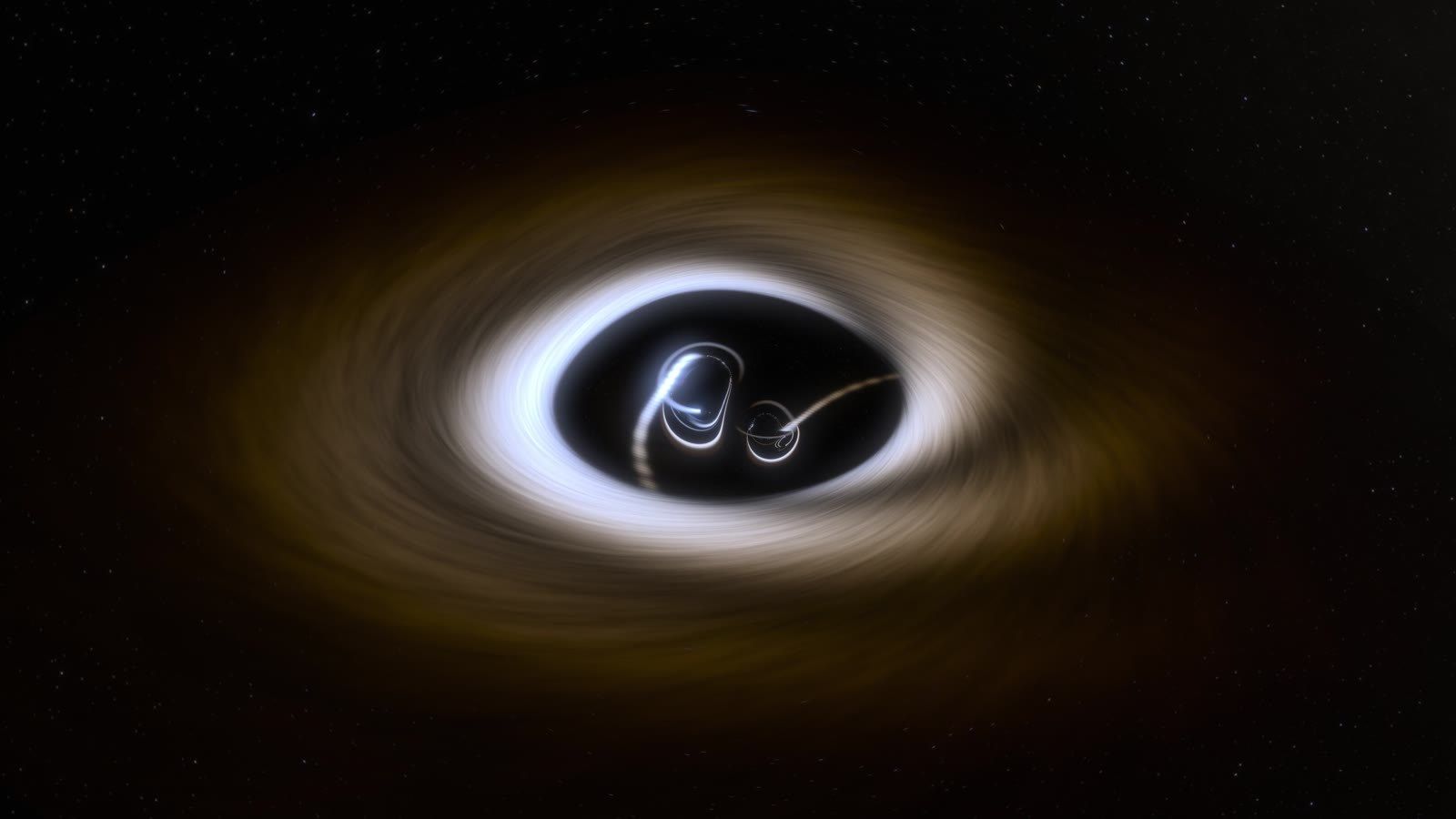
Binary Black Hole Merger GR ray tracer two lensing black holes feed, spiral in, merge and ring down
Galaxies colliding, black holes feeding and merging, dying stars and storm-banded planets. These are our own simulations, inspired by real targets: N-body gravity, hydrodynamics and a general-relativistic ray tracer.
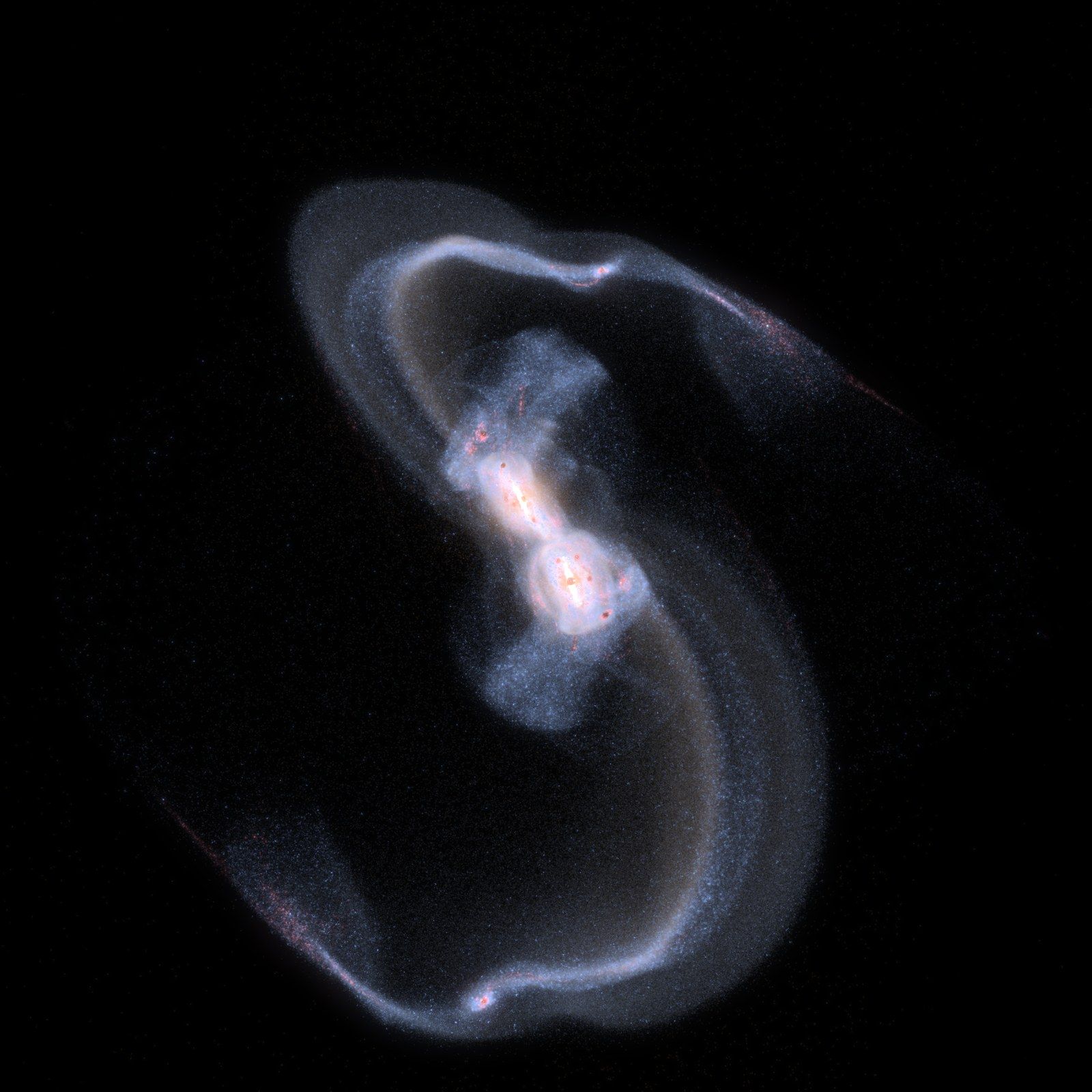
Galaxy collisions N-body + gas 34–40M particles · Antennae, Mice, Milky Way + Andromeda
Binary Black Hole Merger GR ray tracer two lensing black holes feed, spiral in, merge and ring down
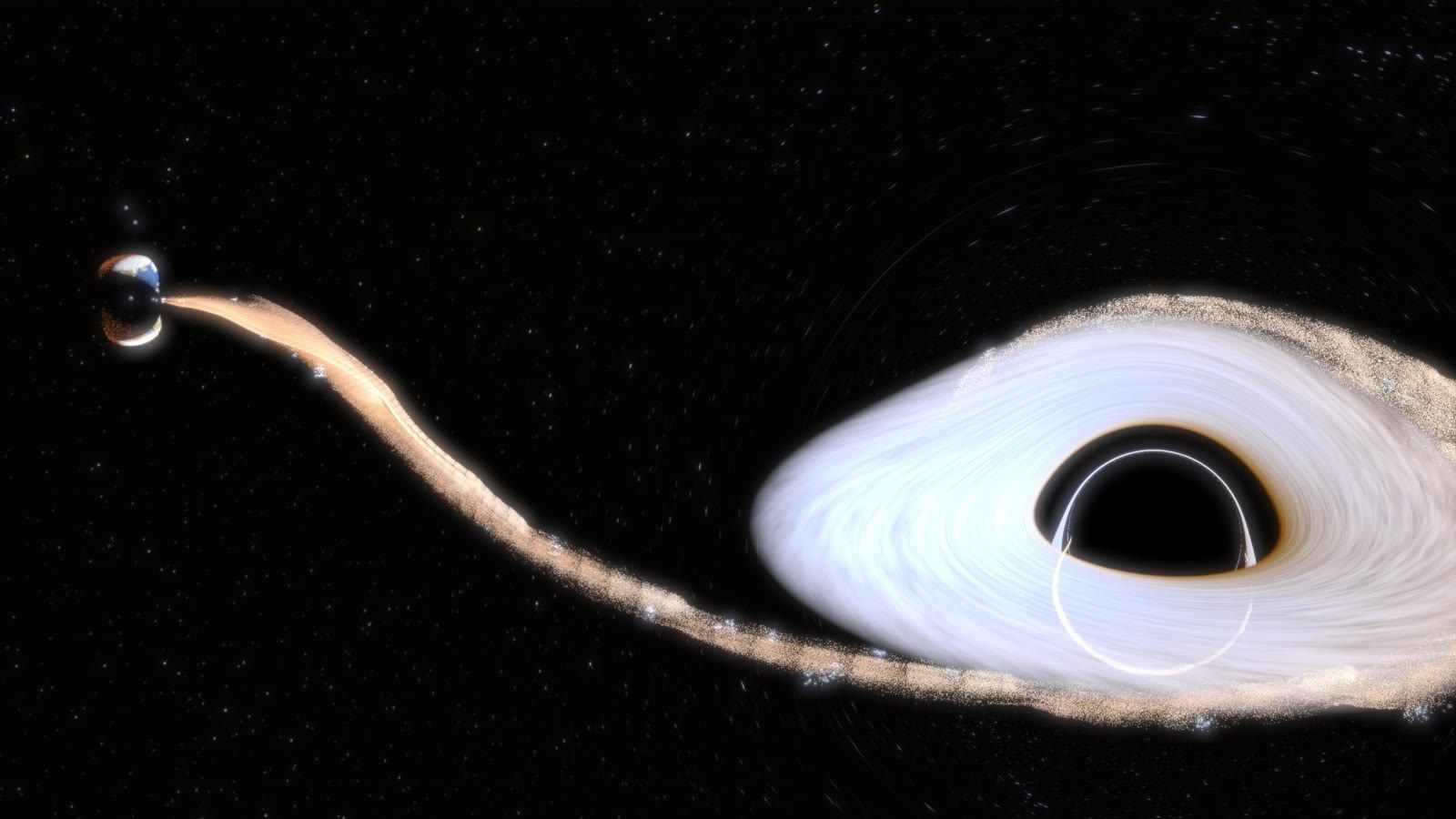
Planet Eater, Tidal Disruption, Kerr Jet Black holes feeding a planet stripped at the Roche limit, then swallowed
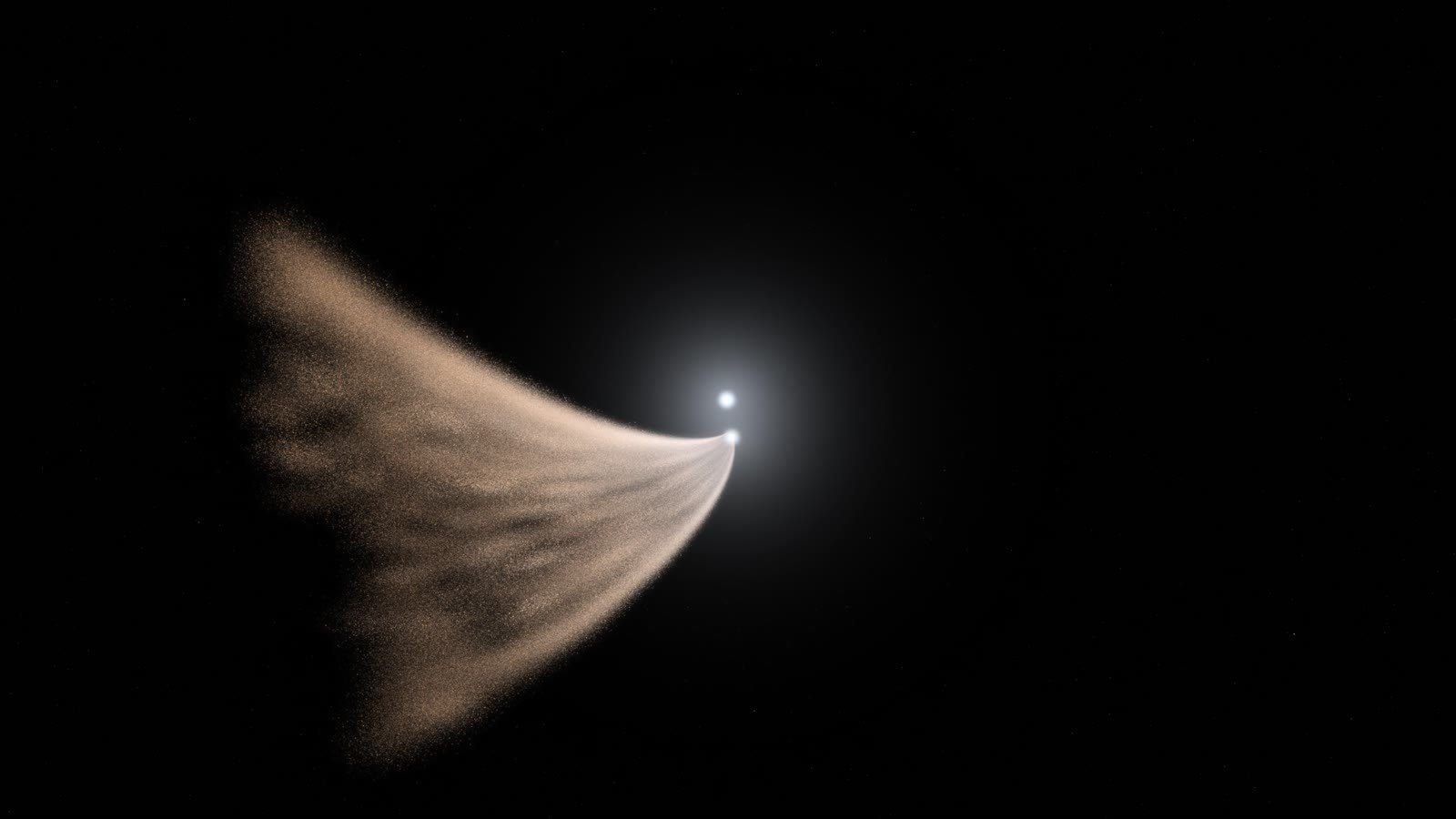
Cosmos III: Stars Hydro + tracers a 589M-grain dust spiral, a boiling supergiant, a 640³ remnant
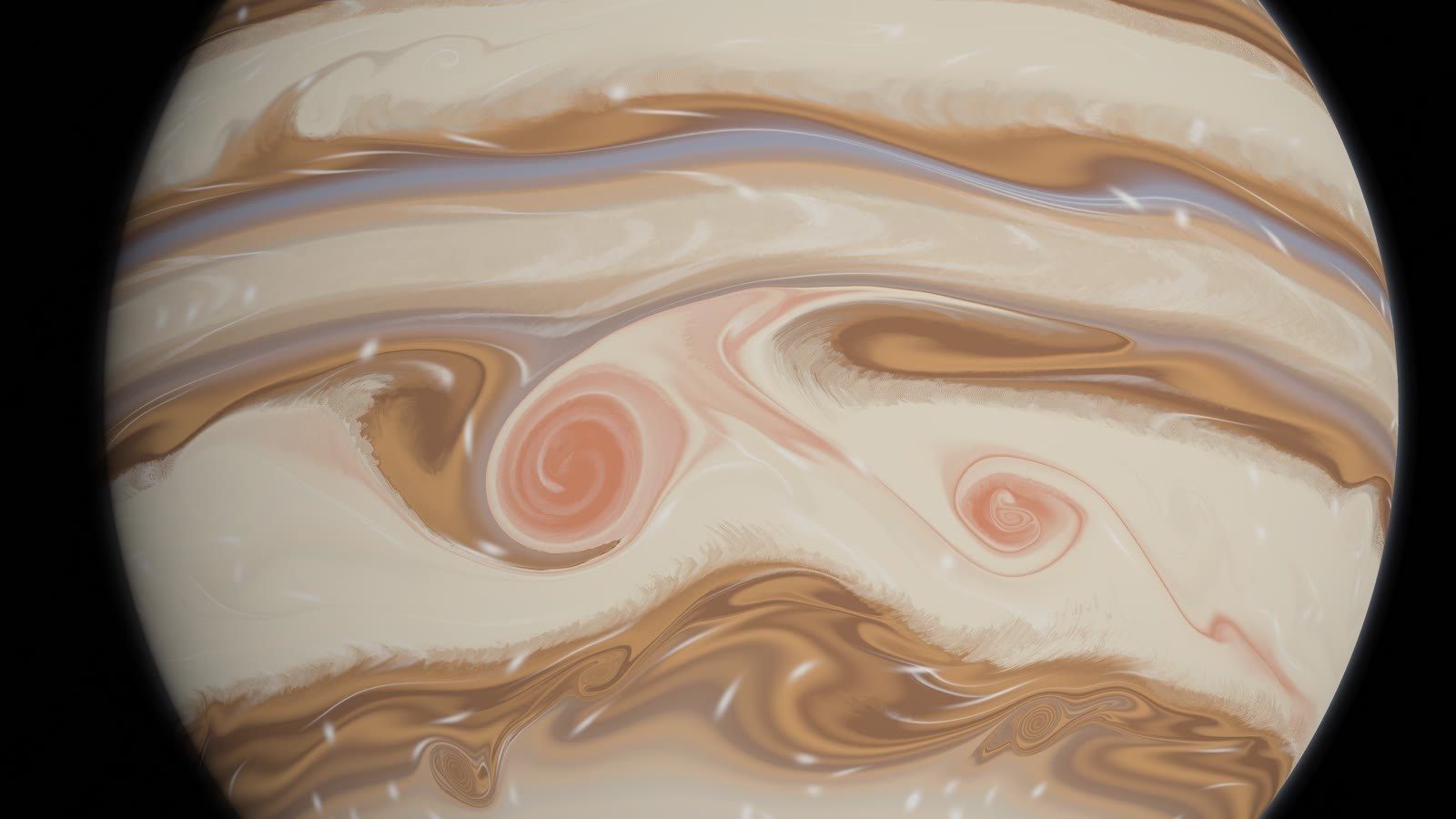
Cosmos IV: Planets Loops shepherd moons sculpt a ring; Jupiter’s bands and storms
Cosmos I: Collisions Loop pack 20 seamless 10 s loops and 4 hits, seam- and ghost-gated
Cosmos II: Star birth Loop pack 14 loops rendered on a second machine by a second agent
Nebulae in your hand Live · WebXR the Ring, Squid, Hourglass and Butterfly nebulae, to turn and look inside
Lighter live versions that run on a phone, a laptop or in Vision Pro, each under 1 MB to load. They are real-time simulations, so the particle counts are far below the renders above.
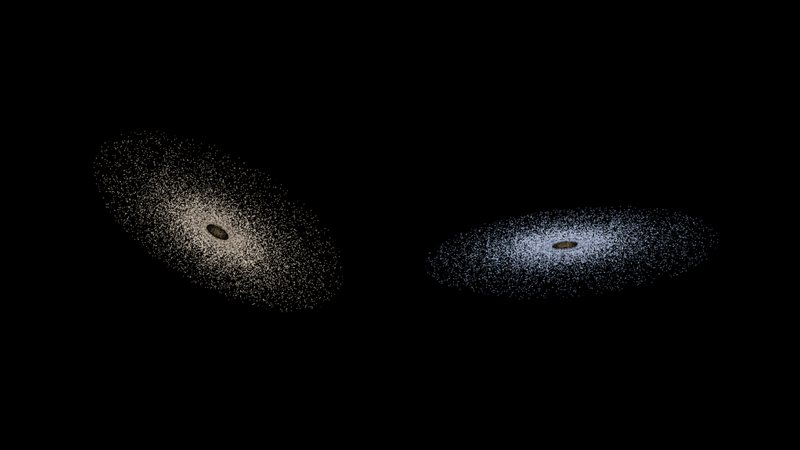
Galaxy Collision (opens in a new tab) Live · WebXR two disk galaxies pass, pull out tidal tails, then fall back together
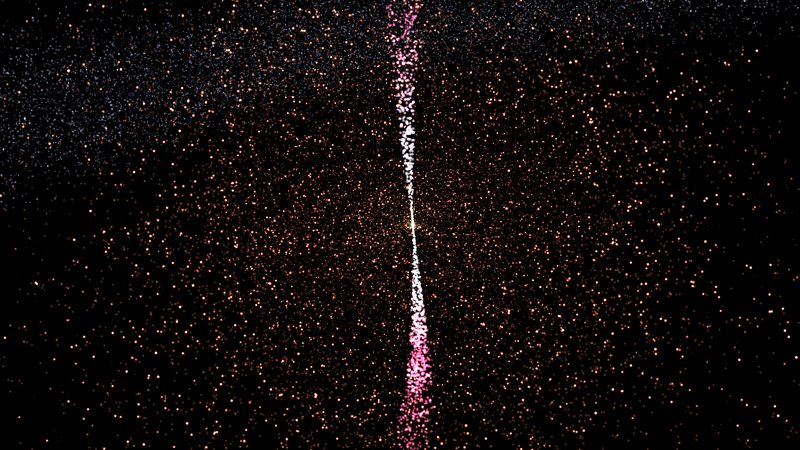
The Sun Is Born (opens in a new tab) Live · WebXR a spinning gas cloud falls into a disk, a newborn star and twin jets
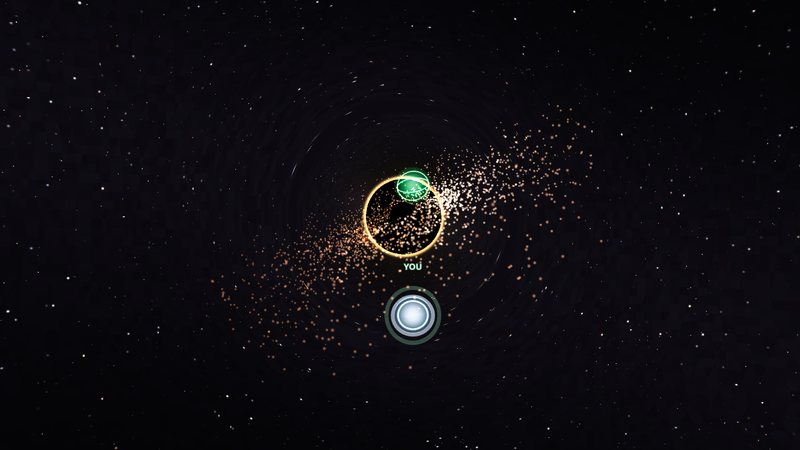
Black Hole Golf (opens in a new tab) Game · WebXR shoot a probe past black holes whose gravity bends its path
More live pieces are at everdust.ai/play (opens in a new tab)